
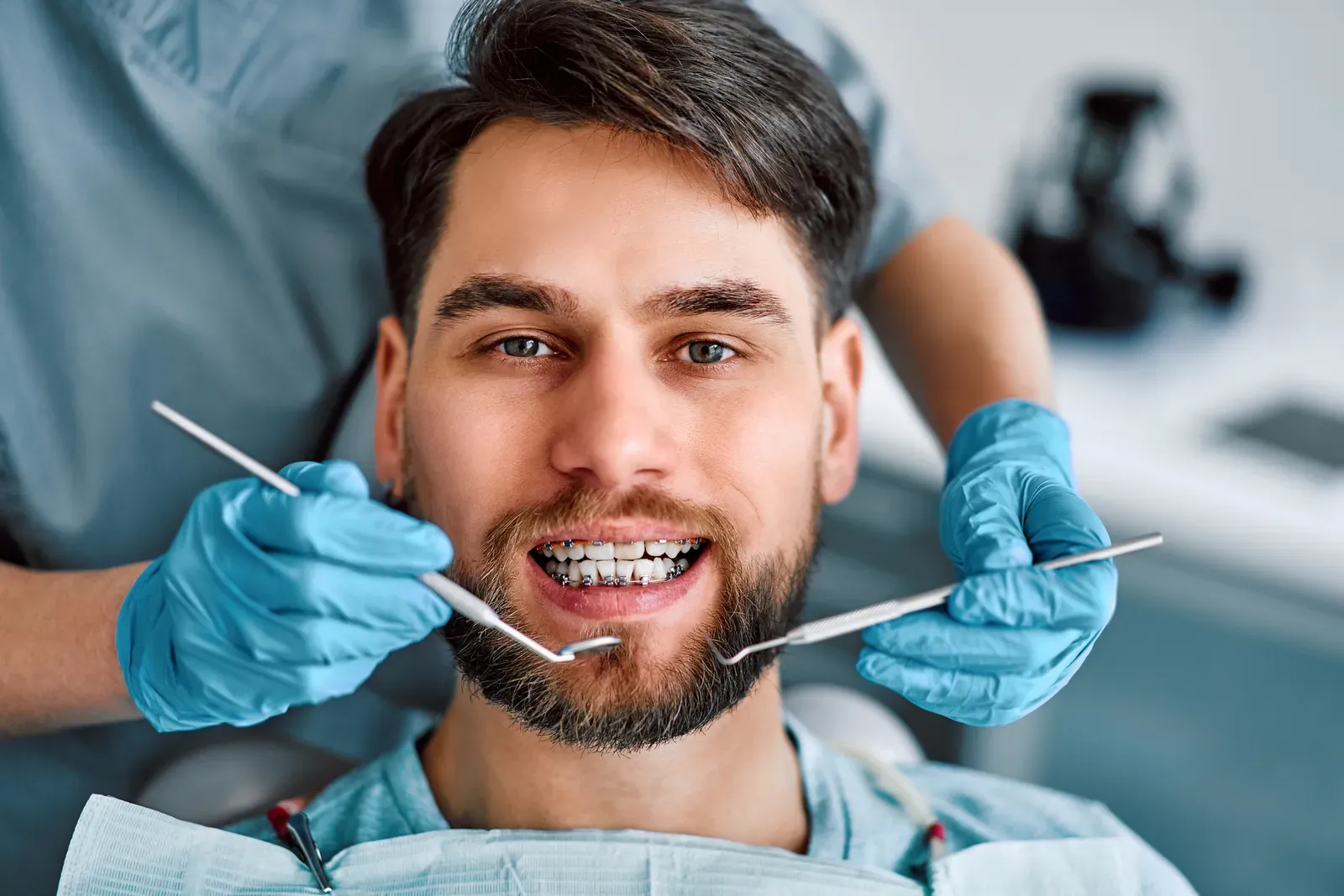
If you've been thinking about straightening your teeth as an adult, or you're weighing options for your teenager, you've probably landed on the same fork in the road that most of our patients face: Invisalign or traditional metal braces. Both can move teeth into healthier, straighter positions, and both have a long track record of success. The real question isn't which one is "better" in some abstract sense - it's which one fits your bite, your lifestyle, and your budget.
We get asked about this comparison almost every week at Flossophy Dental Studio, and for good reason. Orthodontic treatment is a real commitment of time and money, and nobody wants to feel like they guessed wrong halfway through. The good news is that the decision usually becomes much clearer once you understand how each option actually works, what it feels like day to day, and what kinds of dental issues each one handles best.
In this article, we'll walk through the practical differences between Invisalign and traditional braces - appearance, comfort, treatment time, cost, and how well each handles more complex cases - so you can walk into your consultation with informed questions instead of just a general curiosity.
How Invisalign and Traditional Braces Actually Work
Traditional braces use small brackets bonded to the front of each tooth, connected by a metal archwire that's tightened periodically. That constant, gentle pressure gradually pulls teeth into alignment over the course of treatment. Because the brackets are fixed in place, they work around the clock without any effort from you - the mechanism does its job whether you're eating breakfast or sleeping.
Invisalign takes a different approach. Instead of one appliance worn for the full treatment, you get a series of custom, clear plastic aligner trays, each one shifting your teeth slightly closer to their final position. You typically switch to a new tray every one to two weeks, and each tray is designed using a 3D digital scan of your mouth so the whole progression is mapped out before you ever start wearing them.
Both methods rely on the same basic biological principle: consistent, controlled pressure remodels the bone and ligament around a tooth root, allowing it to move. The difference is in the delivery - a fixed wire-and-bracket system versus a removable tray system that depends on you wearing it as directed, generally 20 to 22 hours a day.
Appearance and Day-to-Day Comfort
This is usually the first thing people ask about, and it's a fair concern. Traditional braces are visible - the brackets and wires sit on the front of your teeth for the duration of treatment, though modern options like ceramic (tooth-colored) brackets have made them noticeably less conspicuous than the metal-mouth braces many of us remember from middle school. Invisalign aligners, by contrast, are made of clear medical-grade plastic that's difficult to spot in casual conversation or photos, which is a big reason it appeals to working adults and image-conscious teens alike.
Comfort is a little more nuanced than "one hurts and one doesn't." Traditional braces can cause soreness for a few days after each adjustment appointment, and the brackets themselves can occasionally irritate the inside of the cheeks or lips until you get used to them. Invisalign trays tend to cause less irritation to soft tissue since there's no metal hardware, but you'll still feel pressure and tightness for the first day or two after switching to a new tray in the series.
- Visibility: braces are noticeable at conversational distance; Invisalign is close to invisible.
- Soft tissue irritation: smooth plastic trays generally cause fewer sores than metal brackets and wires.
- Speech adjustment: some patients notice a brief lisp with new aligners; braces don't typically affect speech this way.
- Eating comfort: you remove aligners to eat, so there's no adjusting your bite around hardware.
Treatment Time and What Affects It
Traditional braces treatment generally runs anywhere from 18 to 30 months, depending on how much movement is needed and how the teeth and jaw respond along the way. Because braces are fixed and can't be taken out, compliance isn't usually a factor that slows things down - the pace is dictated mostly by biology and by how consistently you show up for adjustment appointments.
Invisalign timelines vary more widely, often ranging from 12 to 18 months for moderate cases, and sometimes faster for minor cosmetic corrections. But there's an important catch: results depend heavily on wearing the trays for the recommended 20 to 22 hours a day. Take them out too often for meals, socializing, or just forgetting to put them back in, and the timeline stretches out - sometimes considerably.
In other words, Invisalign can be faster for the right patient, but it puts more of the timeline in your hands. Traditional braces trade some convenience for a more predictable, hands-off schedule. During your consultation, we'll look at your specific bite and give you a realistic estimate for both options rather than a generic industry average.
Which Cases Suit Each Option Best
Not every case is a fair fight between the two. Traditional braces remain the more reliable choice for complex orthodontic problems - severe crowding, significant bite misalignment, rotated teeth, or cases that require moving teeth vertically as well as side to side. The fixed bracket-and-wire system can apply more precise, sustained force in multiple directions, which matters when teeth need substantial repositioning.
Invisalign shines with mild to moderate crowding, spacing issues, and many bite corrections, and the technology has genuinely expanded over the years to handle cases that used to be off-limits for clear aligners. That said, severely rotated canines, significant overbites, or teeth that need to be extruded (pulled down or up) still tend to respond better to fixed appliances in many cases.
This is exactly why an in-person evaluation matters more than any online quiz or comparison chart. We take a full set of images and a digital scan of your bite before recommending one path over the other, because guessing based on how your teeth look in the mirror can miss underlying issues with the jaw or root positioning.
Cost, Insurance, and Financing Considerations
Cost is often the deciding factor once the clinical questions are answered. Traditional metal braces typically run somewhat less expensive than Invisalign for comparable cases, though the gap has narrowed in recent years as clear aligner technology has become more common and competitive. Ceramic braces usually cost more than standard metal ones because of the materials involved.
Dental insurance plans that include orthodontic benefits generally treat both options similarly, often covering a percentage or a set lifetime maximum regardless of which treatment you choose - but it's worth confirming this with your specific plan before assuming either option is fully or partially covered. Many plans exclude adult orthodontics entirely, which is another reason to check your benefits early rather than after treatment has already started.
Most practices, including ours, offer monthly payment plans that make either option more manageable regardless of your insurance situation. When you're comparing quotes, ask what's included - retainers, follow-up visits, and any adjustments for lost or damaged aligners can affect the total cost in ways that aren't always obvious from the initial estimate.
Daily Care, Diet, and Maintenance
Living with braces means adjusting how you eat. Sticky candy, hard nuts, popcorn, and even crunchy raw vegetables can bend wires or pop off brackets, leading to an unplanned trip to our office. Brushing and flossing also take more effort, since food particles tend to get trapped around the brackets and under the wire - we usually recommend a water flosser or floss threaders to make this easier.
Invisalign removes most of those dietary restrictions since you take the trays out before eating - you can enjoy popcorn or an apple without worrying about damaging hardware. But that convenience comes with its own responsibility: you have to remember to brush after every meal or snack before putting the trays back in, since food particles trapped against your teeth under a tray can accelerate decay.
Both options require regular checkups so we can track progress, check for any signs of gum irritation or tooth decay, and make sure everything is moving according to plan. Skipping these visits, whether you're in braces or aligners, is one of the most common reasons treatment takes longer than expected.
Key Takeaways
- Traditional braces work continuously and are usually more predictable for complex bite corrections.
- Invisalign is nearly invisible and removable, but results depend on consistently wearing trays 20-22 hours a day.
- Severe crowding, rotations, or vertical tooth movement often respond better to fixed braces.
- Costs are often comparable; check your insurance's orthodontic benefits before deciding.
- A digital scan and in-person exam give a far more accurate answer than guessing from appearance alone.
Frequently Asked Questions
Can adults get Invisalign, or is it mainly for teenagers?
Invisalign works well for adults and is actually one of the most popular orthodontic options for this age group precisely because it's discreet enough for a professional setting. Age isn't the deciding factor - the position of your teeth, your bite, and your commitment to wearing the trays consistently matter far more.
Is Invisalign as effective as traditional braces?
For mild to moderate cases, studies and clinical experience both show Invisalign can achieve results comparable to braces. For more complex movements, particularly involving rotation or vertical repositioning, traditional braces still tend to have an edge in precision and predictability.
Do I need a retainer after either treatment?
Yes, without exception. Teeth naturally drift back toward their original position after any orthodontic treatment, so a retainer - whether removable or fixed - is essential to protect your results long term, regardless of whether you chose braces or Invisalign.
Will either option damage my teeth or gums?
Neither option damages healthy teeth or gums when it's monitored properly, but both can contribute to decay or gum irritation if oral hygiene slips. Braces require more diligent cleaning around brackets, while Invisalign requires discipline about brushing before reinserting trays after meals.
How do I know which option is right for me?
The only reliable way is an in-person consultation with digital imaging of your teeth and bite. We'll walk you through what each option would realistically look like for your specific case, including timeline and cost, so you can make the decision with real information rather than guesswork.
Making the Choice That Fits Your Life
There's no universally "correct" answer between Invisalign and traditional braces - there's only the answer that fits your bite, your schedule, and how disciplined you're willing to be about wearing or maintaining your appliance. Both approaches have straightened millions of smiles and both continue to improve with better materials and more precise digital planning.
What matters most is starting with an honest assessment of your teeth, rather than picking based on which one sounds more convenient. Once we've reviewed your scans and talked through your daily habits and goals, the right path usually becomes obvious - and from there, it's just a matter of staying consistent until you get the smile you're working toward.