$29 Emergency Exam - Walk-Ins Welcome - Same-Day Dental Appointments Available

The landscape of healthcare is shifting. In 2026, the residents of Fort Worth and Haltom City are no longer looking for just a “dentist near me”; they are seeking a specialized healthcare partner. The era of the cold, institutional, and often anxiety-inducing dental visit is being replaced by a more sophisticated, bespoke model: Tailored Oral Health Studios. This evolution is driven by three powerful forces: unprecedented technological precision, a deeper scientific understanding of how the mouth affects the rest of the body, and a psychological shift toward total transparency and patient empowerment.
This guide explores the state of dental care today, offering a deep dive into why your choice of provider matters more now than ever before.
The Rise of Tailored Care: Why Personalization Trumps Production
In the last decade, “volume-based dentistry” saw a massive rise across DFW Area. These large-scale chains often prioritize standardized protocols and high patient turnover. While they offer convenience, they frequently struggle with provider consistency and an “assembly-line” approach to treatment.
By contrast, a Patient-Centric Studio—like Flossophy—focuses on a dedicated philosophy of care. In 2026, the value of a specialized, private practice lies in:
- Continuity of Expertise: Seeing the same doctor and hygienist at every visit allows for the tracking of subtle changes in oral health that a rotating staff might miss.
- Clinical Independence: Private practitioners are not beholden to corporate quotas. This means treatment recommendations are based purely on clinical necessity and the patient’s long-term health goals.
- Environmental Psychology: Dedicated studios are intentionally designed to lower cortisol levels. From the deliberate lighting of the office to the ergonomics of the chairs, every detail is engineered to transition the patient from a state of “flight-or-fight” to one of genuine calm.
The Technology of Comfort: Precision Without the Pain
For many, the fear of the dentist is rooted in the “tools of the trade”—the needles, the drills, and the messy molds. In 2026, innovation has effectively neutralized many of these triggers, replacing them with precision-led alternatives.
The Evolution of Digital Diagnostics
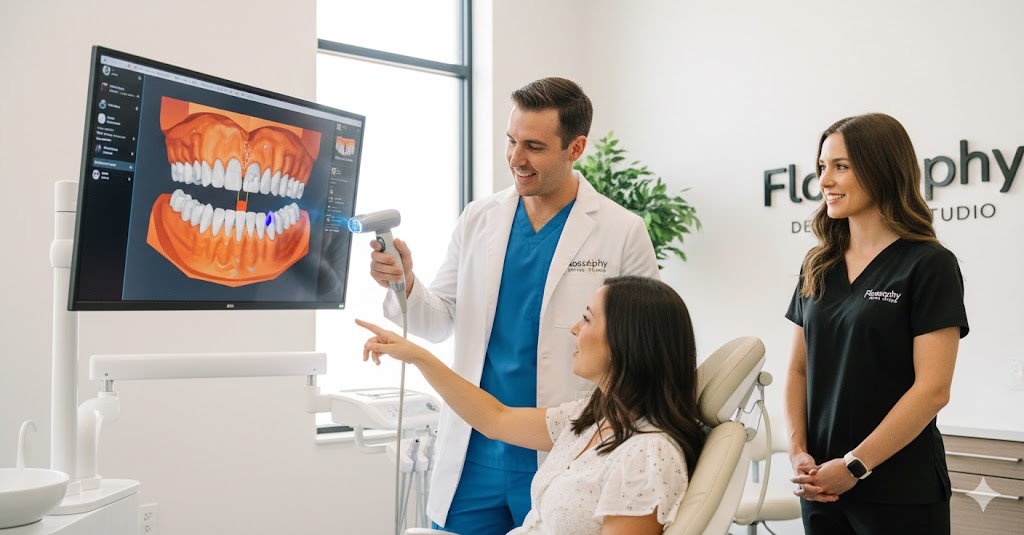
The most significant shift in patient experience has been the widespread adoption of Intraoral Digital Scanners. These devices use high-speed optical sensors to capture thousands of data points per second, creating a perfect 3D digital replica of the mouth without the need for traditional impressions.
Beyond just avoiding a gag reflex, these scans offer:
- Instant Visual Feedback: Patients can see their “Simulated Outcome” for alignment treatments before they even start.
- Predictive Health Mapping: Software can now compare scans from six months ago to today, highlighting microscopic wear on enamel or shifting in teeth that the human eye might miss.
- Bespoke Fit: Because digital scans do not “shrink” or “expand” like traditional putty, restorations like crowns and veneers are custom-crafted with a level of accuracy that was previously impossible.
SOURCE: iTero Scanner
AI-Assisted Detection
Artificial Intelligence is now a standard “second set of eyes” in modern studios. AI algorithms, trained on millions of images, help identify early-stage decay or bone loss with a higher degree of consistency than manual review alone. This ensures that treatment is proactive rather than reactive, often saving the patient from more invasive procedures later.
The Oral-Systemic Connection: A Two-Way Street to Health
Perhaps the most critical advancement in 2026 is the mainstreaming of Integrative Health. We now know that the mouth is not an isolated ecosystem; it is a gateway to the rest of the body.
The Inflammation Link
Chronic periodontal (gum) disease is essentially a constant, open wound in the mouth. This allows bacteria to enter the bloodstream, triggering a systemic inflammatory response. Modern research has established strong, bidirectional links between oral health and several serious conditions:
- Cardiovascular Health: Chronic oral inflammation is linked to increased arterial stiffness and a higher risk of heart disease. Bacteria from the mouth have even been found in the plaque that clogs arteries.
- Metabolic Management: The relationship here is mutual. Uncontrolled blood sugar levels can worsen gum disease, but conversely, treating gum disease has been shown to help stabilize blood sugar levels in diabetic patients.
- Neurological Health: Emerging studies continue to investigate the link between oral pathogens and the progression of cognitive decline.
- Respiratory Resilience: Bacteria from the mouth can be aspirated into the lungs, potentially causing infections such as pneumonia, particularly in elderly patients or those with weakened immune systems.
In 2026, a top-tier dentist doesn’t just look at your teeth; they look at your health history and collaborate with your primary care physician to ensure your “oral fitness” supports your overall longevity.
The Psychology of Trust: Transparency as a Treatment
The biggest barrier to dental care in the past wasn’t just physical pain—it was uncertainty. Patients often felt they were being “sold to” rather than “cared for.” The modern dental philosophy centers on Radical Integrity.
The “Evidence-Based” Philosophy
Trust is built through visual proof. Modern practices use Intraoral High-Definition Cameras to take photos of specific teeth. When a doctor identifies a failing restoration, they don’t just ask you to take their word for it; they show you the fracture on a high-definition monitor. This shift from “telling” to “showing” empowers the patient to become a partner in their own care.
Financial Clarity
In 2026, financial surprises are a hallmark of outdated care. Bespoke practices now utilize real-time verification and clear, itemized health plans. Whether a patient is using a PPO insurance plan or a private In-House Membership, they should know exactly what their investment is before the first instrument is ever touched.
Navigating the Fort Worth & Haltom City Landscape
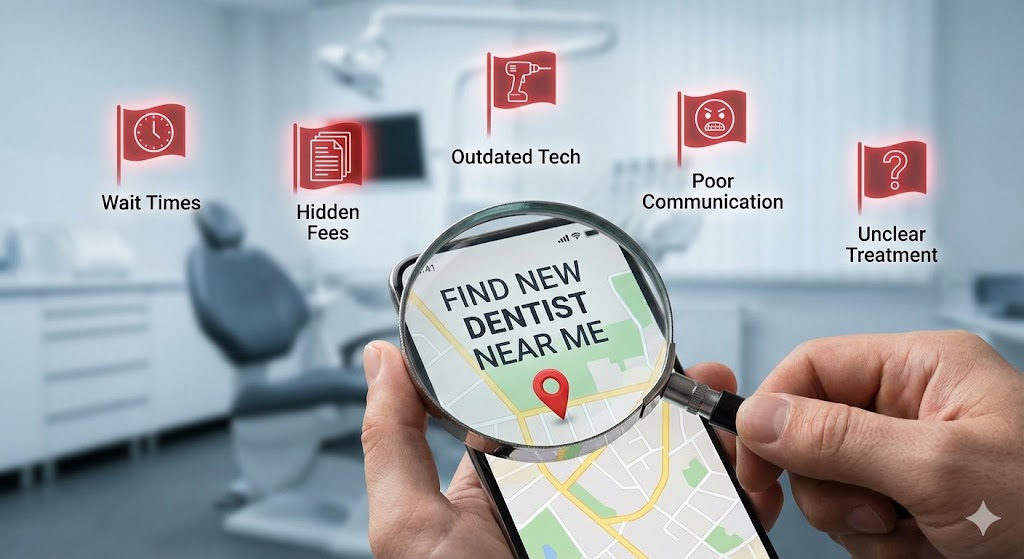
For families in North Texas, choosing the right studio often comes down to a balance of local convenience and superior quality. When evaluating a provider in the Alliance, Heritage, or Haltom City areas, consider the following “Masterclass Checklist”:
- Do they use digital scans? If they are still using traditional putty, they are behind the curve of precision and comfort.
- Is the environment “Curated” or “Corporate”? Consider your own anxiety levels. If you feel like a number in the waiting room, you will likely feel like a number in the chair.
- Do they discuss Integrative Health? A dentist who only talks about “fillings” is missing the bigger picture of your total well-being.
- Are they transparent with diagnostics? Ask if you will be able to see your own intraoral photos and 3D scans in real-time.
Conclusion: Empowering Your Smile in 2026
The goal of modern dentistry is no longer just “fixing teeth.” It is about preservation, prevention, and empowerment. By choosing a practice that leverages the latest innovation, understands the deep biological links between the mouth and the body, and prioritizes an honest, transparent relationship, you are making an investment in your total health.
Your smile is the most visible part of your health, but the benefits of modern, tailored dental care run much deeper than the surface. In 2026, you deserve a “flossophy” of care that is as innovative as it is compassionate.