$29 Emergency Exam - Walk-Ins Welcome - Same-Day Dental Appointments Available

There’s a reason gum disease is one of the most widespread dental conditions in the country—and it’s not because people are careless or neglectful. It’s because gum disease is genuinely, frustratingly sneaky. It doesn’t announce itself with sudden dramatic pain. It doesn’t set off alarm bells in the early stages. It just quietly progresses in the background, doing damage that accumulates slowly over months and years, until one day you’re sitting in a dental chair hearing news you didn’t see coming.
If you live in Fort Worth, this matters more than you might think. Between the Texas heat pushing sugary drink consumption, a culture built around BBQ and comfort food, and the reality that many residents go longer between dental visits than they should, gum disease has plenty of conditions to thrive in around here.
And the fact that it rarely hurts in its early stages means most people have no idea anything is wrong until the problem is already significant. So let’s change that. Here’s what gum disease actually looks like in the real world, why it’s so easy to miss, and what Fort Worth residents can do about it.
What Gum Disease Actually Is — And Why It’s So Easy to Miss
It Starts Smaller Than You’d Think
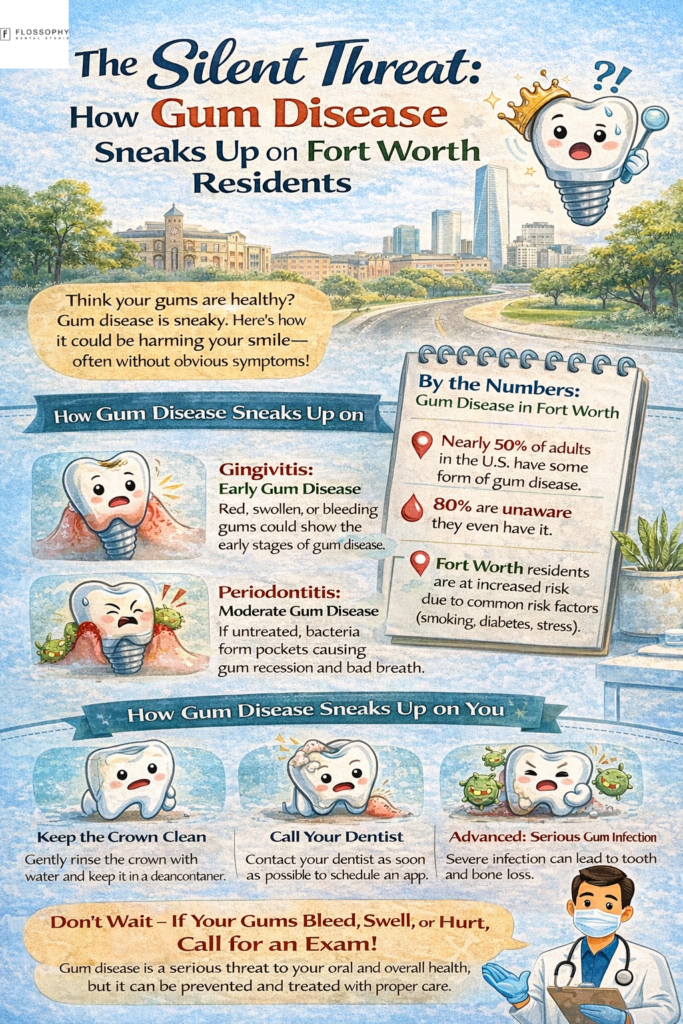
Gum disease — technically called periodontal disease — begins with gingivitis. At this early stage, bacteria in the mouth form plaque along the gumline. If that plaque isn’t removed through brushing and flossing, it hardens into tartar, which irritates the gum tissue and causes inflammation.
Here’s the thing about gingivitis: it’s almost completely painless. Your gums might look slightly redder than usual. They might bleed a little when you brush — something most people brush off as brushing too hard or using a firm-bristled toothbrush. There’s rarely any discomfort, no swelling you’d notice in the mirror, and no signal dramatic enough to send you running to the dentist.
So most people don’t. They adjust how they brush, maybe switch toothbrushes, and carry on. And the gingivitis quietly continues.
The Progression Nobody Feels Coming
Left unaddressed, gingivitis advances into periodontitis — the more serious, destructive stage of gum disease. At this point, the infection moves below the gumline. The gums begin pulling away from the teeth, forming pockets where bacteria collect and multiply. The bone and connective tissue that hold teeth in place start to break down.
This is where the long-term damage happens. And here’s what makes it so dangerous: periodontitis can still be largely painless for a significant stretch of time. You might notice your teeth look slightly longer than they used to — that’s the gums receding, exposing more of the tooth surface. You might have persistent bad breath that doesn’t respond to brushing and mouthwash. Your teeth might start feeling slightly loose. But pain? Often not until the disease is quite advanced.
By the time most people experience noticeable discomfort or obvious visual changes, periodontitis has typically been developing for months — sometimes years.
Why Fort Worth Residents Are Particularly Vulnerable
The Texas Diet Factor
Fort Worth has a food culture worth celebrating — the BBQ, the Tex-Mex, the sweet tea, the craft beer scene along the Near Southside. But the honest reality is that a diet high in sugar and refined carbohydrates creates ideal conditions for the bacteria that cause gum disease. Sugar feeds the bacteria that produce acid and inflammatory byproducts, and those byproducts are exactly what irritate and break down gum tissue over time.
This isn’t a reason to skip the brisket. It’s a reason to be more intentional about balancing indulgences with good oral hygiene and regular professional cleanings — which brings us to the next point.
The Gap Between Dental Visits
Nationally, around 40% of adults don’t see a dentist every year. In a city like Fort Worth where life moves fast — where families are juggling work, kids, Cowtown Coliseum events, and everything in between — dental appointments are often the first thing that gets pushed to next month, then next quarter, then next year.
Professional cleanings are the only way to remove tartar buildup from below the gumline. No amount of brushing and flossing at home, no matter how diligent, can do what a hygienist does during a professional cleaning. When those visits get spaced out or skipped entirely, tartar accumulates, the bacterial environment worsens, and gum disease gets a longer runway to develop completely undetected.
Systemic Risk Factors That Amplify the Problem
Certain health conditions and lifestyle factors make Fort Worth residents more susceptible to periodontal disease regardless of how well they brush. Diabetes is a significant one — diabetics are considerably more likely to develop gum disease, and gum disease in turn makes blood sugar harder to control, creating a difficult cycle.
Smoking is another major risk factor, and Texas has higher-than-average rates of tobacco use. Stress, hormonal changes, certain medications that cause dry mouth, and even genetics all play a meaningful role.
If any of these apply to you, your baseline risk for gum disease is already elevated — which makes regular professional monitoring even more important.
The Warning Signs That Are Easy to Dismiss
Most Fort Worth residents who have early-stage gum disease are unaware. Here’s what to watch for — even when the signs seem too minor to worry about.
Bleeding When You Brush or Floss
This is the single most commonly dismissed early warning sign. Healthy gums do not bleed during normal brushing. If yours do, even occasionally, it’s a signal that inflammation is present. It’s not a brushing technique issue. It’s not that you’re flossing too vigorously. It’s your gums telling you something is off — and it’s worth listening.
Gums That Look Different Than They Used To
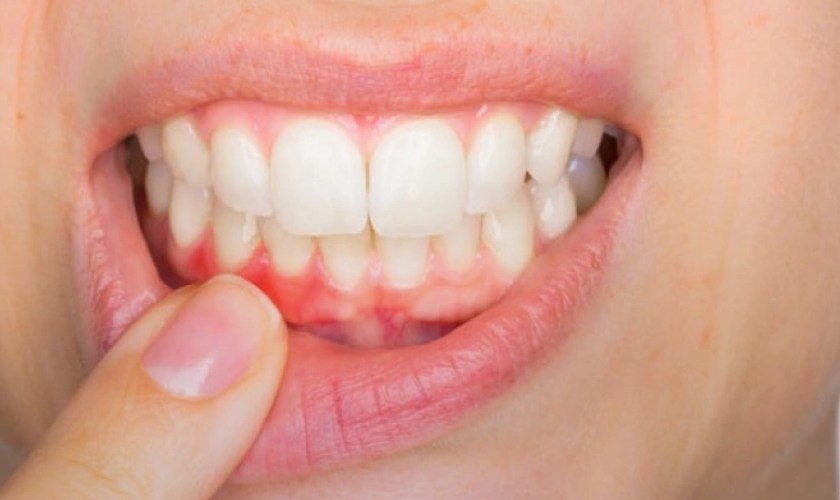
Healthy gums are firm, pink, and sit snugly around the base of your teeth. Gums affected by disease tend to look redder, slightly swollen or puffy, or have started pulling away from the teeth. These changes happen so gradually that they’re genuinely easy to miss — you’d need to be actively looking for them to notice the shift over time.
Persistent Bad Breath
Bad breath that persists after brushing, flossing, and using mouthwash can be a sign of bacterial activity below the gumline. The bacteria involved in periodontal disease produce sulfur compounds that cause a distinct, persistent odour — one that regular oral hygiene can’t fully address because the source is in the gum pockets themselves, not on the tooth surfaces where your brush can reach.
Teeth That Feel Sensitive or Slightly Loose
As gums recede, tooth roots become partially exposed. Those root surfaces are significantly more sensitive than enamel, which is why gum disease often causes heightened sensitivity to hot and cold temperatures. As the bone supporting the teeth gradually breaks down, teeth can begin to feel slightly less stable — a change that starts slowly but becomes more noticeable as the disease progresses.
What Gum Disease Treatment Actually Looks Like
The good news — and there genuinely is good news here — is that gum disease caught in the early to moderate stages is very treatable. It doesn’t always mean surgery or dramatic intervention, and it doesn’t have to be an overwhelming process.
At Flossophy Dental Studio, Dr. Matthew Le and the team approach gum disease treatment based on where each individual patient is in the progression of the disease. There’s no one-size-fits-all protocol, because no two cases are exactly the same.
For early-stage gum disease, a deep cleaning procedure called scaling and root planing is often the first line of treatment. This involves carefully removing tartar and bacteria from below the gumline and smoothing the root surfaces so that healthy gum tissue can begin to reattach properly. With improved home care routines and more frequent professional cleanings, many patients see significant and lasting improvement with this approach alone.
For more advanced cases, additional treatments may be recommended — including antimicrobial therapy, laser gum treatment, or in some cases, surgical procedures to restore the tissue and bone that have already been affected.
If you’ve been putting off looking into gum disease treatment in Fort Worth, the most important thing to understand is this: the sooner you come in, the more options you have. Early-stage treatment is simpler, less invasive, and considerably less expensive than treating periodontitis that has been quietly progressing for years.
You Can’t Feel Your Way to a Diagnosis
Because gum disease rarely causes pain in its early stages, you simply cannot rely on discomfort to tell you when to seek help. By the time it hurts, the disease has typically been doing damage for a long time.
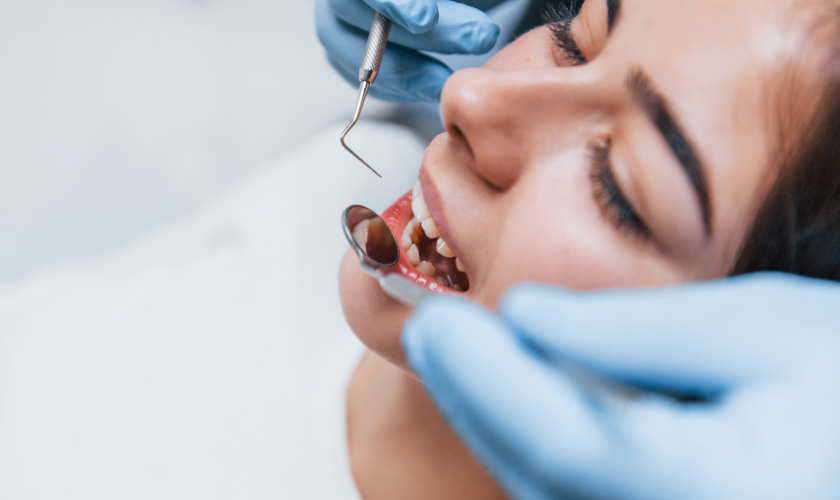
The only reliable way to catch gum disease early is through regular professional checkups where your dentist or hygienist measures gum pocket depths, looks for bone changes on X-rays, and evaluates the overall health of your periodontal tissue. These are assessments that cannot be replicated at home — no app, no mirror check, no toothbrush can tell you what a trained eye and a periodontal probe can.
If it’s been more than six months since your last cleaning — or if any of the warning signs above sound frustratingly familiar — this is the right moment to book an appointment. Flossophy Dental Studio is here for Fort Worth residents who want honest, thorough, personalised dental care. Your gums are worth protecting, and the sooner we take a look, the better your options are going to be.
FAQs
1. Is gum disease common in Fort Worth specifically, or is this a general problem everywhere?
Gum disease is genuinely widespread nationally. In Fort Worth, dietary habits, the pace of life making dental visits easy to postpone, and higher rates of certain risk factors like smoking and diabetes in Texas create conditions where gum disease can thrive particularly well.
2. My gums bleed sometimes when I floss but I have no pain — should I be worried?
Yes, this is worth taking seriously. Bleeding gums during flossing is a classic early sign of gingivitis, even in the complete absence of pain. The lack of discomfort doesn’t mean everything is fine — it just means the disease is still in its earlier stages, which is actually the best possible time to address it. Book a checkup sooner rather than later.
3. Can I reverse gum disease on my own with better brushing and flossing?
Improved home care can help manage early-stage gingivitis, but it cannot remove tartar that has already hardened below the gumline — that requires professional treatment. And once gum disease has progressed to periodontitis, home care alone is not sufficient to reverse the damage that has occurred. Professional intervention is necessary to stop the progression and stabilize the condition.
4. Does dental insurance cover gum disease treatment in Fort Worth?
Most dental insurance plans provide some level of coverage for periodontal treatment, though the specifics vary significantly by plan. The team at Flossophy Dental Studio is happy to verify your benefits before your appointment and walk you through your financial options so there are no unexpected costs on the day of treatment.