$29 Emergency Exam - Walk-Ins Welcome - Same-Day Dental Appointments Available

Losing a tooth changes more than your smile. It triggers a chain reaction beneath the gum line that most patients never see coming. If you are researching dentures vs. implants and which actually preserves your jawbone longer in Blue Mound, you are asking exactly the right question. The answer affects your face shape, your chewing ability, and your confidence for decades. Dr. Matthew Le at Flossophy Dental Studio helps patients weigh these options with honest, clear information every day.
Why Jawbone Loss Matters After Tooth Loss
Your jawbone stays healthy because tooth roots stimulate it constantly. Every time you bite or chew, that pressure travels through the root and signals the bone to regenerate. When a tooth is gone, that signal disappears. The bone begins to shrink — a process called resorption.
Resorption is not just a cosmetic concern. It changes the structure of your face over time. Cheeks can look sunken, and the chin may appear to jut forward. The longer teeth stay missing, the more pronounced this effect becomes.
In Blue Mound and the greater Fort Worth area, many patients only discover this risk after it has already started. Understanding the bone preservation difference between dentures and implants early gives you far better long-term outcomes.
Dentures vs. Implants: How Each Option Affects Bone
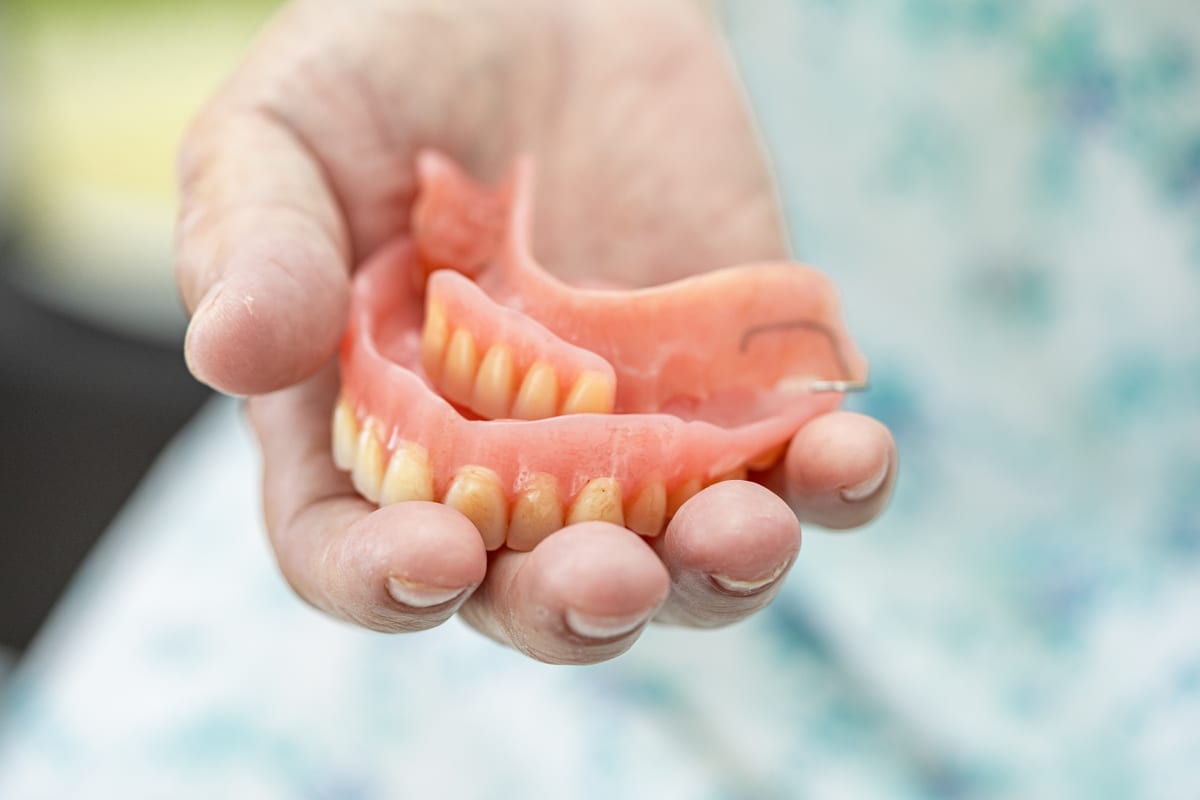
This is the core of the dentures vs. implants debate for Blue Mound patients. Traditional dentures sit on top of the gum. They restore the appearance of teeth and some chewing function. However, they do not replace the tooth root.
Without root stimulation, the jawbone continues to resorb under a denture. Studies estimate patients lose roughly 25% of bone width in the first year after extraction alone. Over many years, the bone loss becomes significant. This is why dentures often need periodic refitting — the ridge beneath them keeps shrinking.
Dental implants work very differently. A titanium post is surgically placed directly into the jawbone. It acts like a natural root. The bone fuses around it through a process called osseointegration. This fusion stops resorption and actively preserves bone density.
- Dentures rest on gum tissue — no root stimulation occurs
- Implants integrate with the bone — stimulation is restored
- Bone loss under dentures is gradual but continuous over years
- Implants have shown bone preservation rates comparable to natural teeth
- Poorly fitting dentures can actually accelerate bone loss through pressure points
Cost, Function, and Quality of Life: An Honest Comparison
Dentures typically cost less upfront than implants. That makes them appealing, especially when the immediate financial pressure feels significant. But cost over a lifetime tells a different story.
Dentures require adhesives, periodic relining, and eventual replacement. Some patients replace full dentures every five to ten years. Implants involve higher initial investment but typically last decades with proper care. They also require no adhesives and feel far more like natural teeth.
From a function standpoint, implants restore nearly full chewing force. Dentures restore roughly 20 to 25% of natural bite strength. That difference affects what foods you can eat, your nutrition, and how comfortable you feel in social settings.
- Implants allow you to eat hard fruits, nuts, and fibrous vegetables
- Dentures may require avoiding many foods that can dislodge or damage them
- Implants do not shift or click when speaking
- Denture wearers often report reduced confidence when eating in public
- Implants require brushing and flossing — no special removal routine
- Dentures require nightly removal and soaking
Quality of life improvements with implants are well-documented. Patients report higher self-esteem, better nutrition, and fewer social limitations. For Blue Mound residents who want a long-term solution, implants consistently deliver stronger results across all categories.
Who Is a Good Candidate for Dental Implants in Blue Mound?
Not every patient qualifies for implants immediately. Sufficient jawbone density is required to support the titanium post. Patients who have experienced significant bone loss may need a bone graft first. Dr. Matthew Le evaluates each patient individually using digital imaging.
Good overall health matters too. Uncontrolled diabetes or certain medications can affect how well the bone heals around an implant. A thorough consultation at Flossophy Dental Studio helps identify whether implants are the right fit right now — or whether a preparatory step is needed first.
Age is rarely a barrier for adults. Younger patients benefit most from implants because they stop bone loss earlier. However, older adults also achieve excellent outcomes when placed by an experienced provider. If you experience sudden dental pain or tooth loss requiring urgent attention, our Emergency Dentistry team is ready to help you right away.
Combining Treatments and Exploring Your Options
Some patients start with dentures as a transitional solution and later transition to implant-supported dentures. This approach combines the affordability of dentures with the bone-preserving benefits of implants. It is a practical path for patients who need immediate tooth replacement while planning for long-term stability.
Implant-supported dentures snap onto two or more implants. They eliminate slipping and dramatically improve chewing function. The implants still stimulate the bone beneath, slowing resorption significantly compared to traditional dentures.
Beyond function, many patients explore appearance enhancements alongside restorative work. Cosmetic Dentistry options like veneers and whitening can complement implant crowns to create a seamless, natural-looking smile. Dr. Matthew Le takes a whole-smile approach to help every Blue Mound patient feel confident in their final result.
Making the Right Decision for Your Long-Term Health
Choosing between dentures and implants is not just a financial decision. It is a health decision with consequences that last decades. Dentures provide affordable, accessible tooth replacement. Implants provide bone preservation, superior function, and long-term value that dentures cannot match.
If jawbone preservation is your priority — and for most patients it should be — implants offer the clearest advantage. Every year without root stimulation is a year of bone loss that becomes harder to reverse. Acting early gives your jawbone the best chance of staying strong and supporting your face for life.
Dr. Matthew Le and the team at Flossophy Dental Studio are here to guide Blue Mound patients through every step of this decision. You deserve honest information and a personalized treatment plan — not a one-size-fits-all recommendation. Book Now to schedule your appointment with our team.
Frequently Asked Questions
Do dentures cause jawbone loss over time?
Yes. Traditional dentures do not replace the tooth root, so they provide no stimulation to the underlying jawbone. Without that stimulation, the bone gradually resorbs. This is why dentures often need refitting over time as the ridge beneath them changes shape.
How long do dental implants last compared to dentures?
Dental implants can last 20 to 30 years or longer with proper care, and many patients keep them for life. Traditional dentures typically need replacement every five to ten years and require ongoing maintenance like relining and adhesives.
Can I get implants if I have already had bone loss from dentures?
Possibly yes. Patients with significant bone loss may require a bone graft procedure before implant placement. Dr. Matthew Le uses digital imaging to assess your current bone density and discuss whether grafting is needed before moving forward.
Are dental implants painful to get?
Most patients report that implant placement is more comfortable than they expected. Local anesthesia is used during the procedure. Some mild soreness and swelling follow the surgery, but it typically resolves within a few days. The long-term comfort far outweighs the brief recovery period.
Is there an option between full dentures and individual implants?
Yes. Implant-supported dentures are a popular middle-ground option. They use two or more implants to anchor a denture securely in place. This eliminates slipping, improves chewing force, and provides some bone stimulation — at a lower cost than replacing each tooth individually with a single implant.