$29 Emergency Exam - Walk-Ins Welcome - Same-Day Dental Appointments Available

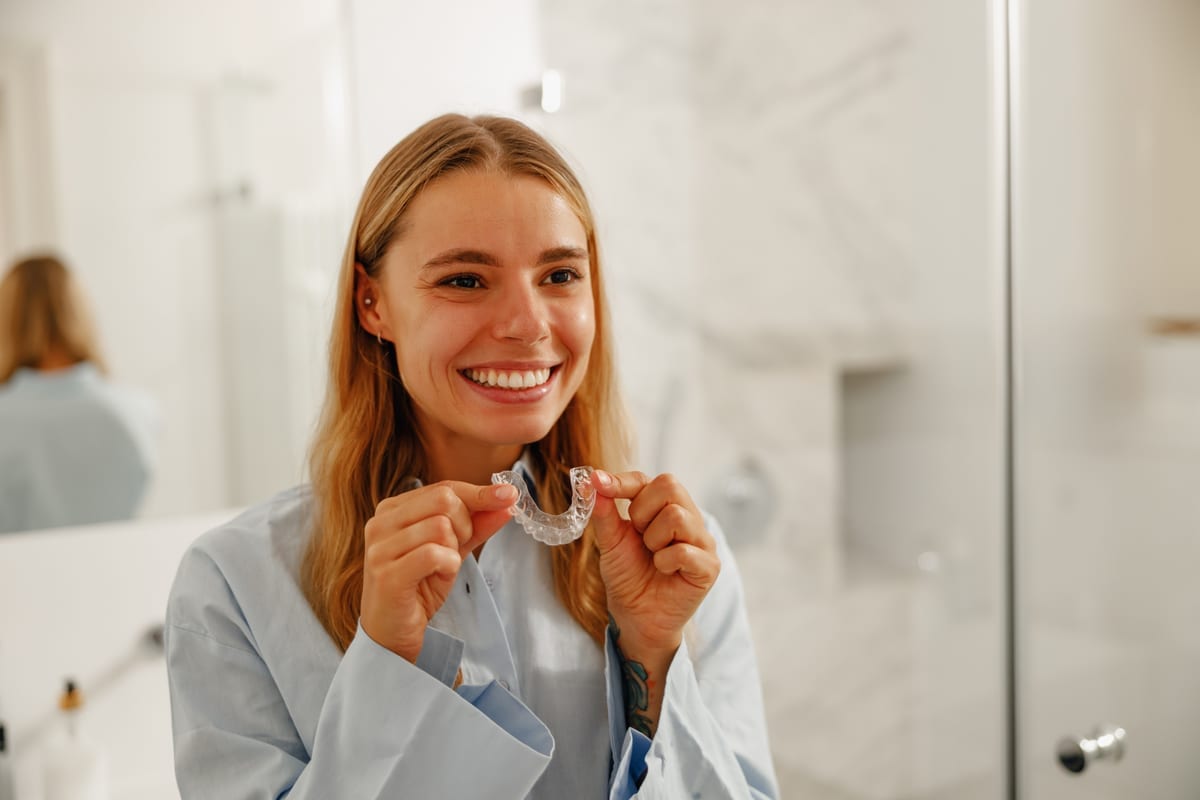
If you live near Keller and wonder, can Invisalign fix your bite, or do you need braces? — you are not alone. Many patients feel confused about which option is right for them. The truth is that both treatments work well, but they shine in different situations. Understanding those differences helps you make a confident, informed choice.
At Flossophy Dental Studio, Dr. Matthew Le helps Fort Worth-area patients explore their orthodontic options every day. This guide walks you through what Invisalign can handle, what it cannot, and when braces may serve you better.
What Invisalign Can Fix for Keller Patients
Invisalign uses a series of clear, removable aligners to shift teeth gradually. It has improved dramatically over the years. Many bite and alignment issues that once required braces can now be treated with aligners.
Invisalign works well for these common concerns:
- Mild to moderate crowding — teeth that overlap or are too close together
- Mild to moderate spacing — gaps between teeth that affect your smile and bite
- Mild overbite — upper front teeth that slightly overlap the lower front teeth
- Mild underbite — lower teeth that sit in front of the upper teeth in minor cases
- Crossbite — when upper and lower teeth do not align correctly on one or both sides
- Open bite — when upper and lower teeth do not touch when you close your mouth
Technology like SmartForce attachments has expanded what aligners can accomplish. These small tooth-colored bumps help the trays grip teeth and create more complex movements. Invisalign is also a popular choice for patients who want a discreet option through Cosmetic Dentistry.
When Invisalign Has Limitations
Invisalign is not the right fit for every patient. Certain bite problems require the consistent, precise force that only fixed braces can provide. Knowing these limits helps you set realistic expectations.
Invisalign may not be the best choice when:
- Crowding or spacing is severe and requires significant tooth movement
- You have a significant overbite or underbite that involves jaw misalignment
- Teeth need vertical repositioning, which is difficult for aligners
- You have bridgework or large restorations that limit aligner attachment
- The patient is a young child whose jaw is still developing
Compliance also plays a role. Invisalign aligners must be worn 20 to 22 hours per day. Patients who struggle with consistency may not see the results they expect. Braces are bonded to the teeth, so they work around the clock without any patient effort.
Skeletal issues — where the jaw bones themselves are misaligned — often require braces combined with other treatments. In some complex cases, orthodontic surgery may also be discussed alongside any appliance choice.
Can Invisalign Fix Your Bite, or Do You Need Braces? Key Differences Explained
This is one of the most common questions Dr. Le hears from Keller-area patients. The short answer is: it depends on the severity and type of bite problem. Both systems move teeth, but they apply force in different ways.
Braces use metal or ceramic brackets bonded directly to teeth. Wires and elastic bands create continuous, targeted pressure. This gives orthodontists precise control over each tooth’s movement.
Invisalign, on the other hand, uses a series of custom-fit trays. Each tray moves teeth a fraction of a millimeter at a time. This is highly effective for mild to moderate cases but less powerful for major corrections.
Here is a simple way to think about it:
- Invisalign — best for cosmetic alignment, mild bites, and image-conscious adults
- Braces — best for complex bites, growing patients, and cases needing strong force
Dr. Le will review X-rays, take digital impressions, and assess your bite thoroughly. That evaluation determines which path makes the most clinical sense for your unique situation.
What Happens During Your Orthodontic Consultation in Keller
Many patients feel nervous about their first orthodontic consultation. At Flossophy Dental Studio, the process is straightforward and pressure-free. Dr. Le takes time to explain every finding in plain language.
Here is what you can expect:
- Comprehensive exam — Dr. Le examines your teeth, gums, and jaw alignment
- Digital X-rays — imaging reveals root positions and bone structure
- Impressions or scans — a 3D digital scan maps your bite precisely
- Treatment discussion — Dr. Le explains which options fit your case and why
- Custom treatment plan — you receive a clear outline of timeline and next steps
If you have a dental emergency or urgent tooth pain, that gets addressed first. Orthodontic treatment always starts from a healthy foundation. For urgent concerns, Dr. Le also offers Emergency Dentistry to handle pressing needs before any elective treatment begins.
Tips for Choosing Between Invisalign and Braces
Still weighing your options? These practical tips can help you think it through before your consultation.
- Consider your lifestyle — Invisalign is removable, so you can eat anything you like
- Think about visibility — clear aligners are nearly invisible; braces are more noticeable
- Be honest about compliance — aligners require discipline; braces do not
- Ask about your specific bite — only a clinical exam reveals what your bite truly needs
- Factor in treatment length — complex cases with braces may take longer overall
Dr. Le will never recommend a treatment that is not clinically appropriate for you. His goal is to achieve lasting results, not just a quick fix. A healthy, functional bite is the priority alongside a confident smile.
Conclusion
Deciding between Invisalign and braces is not one-size-fits-all. The best choice depends on the complexity of your bite, your lifestyle, and your treatment goals. Keller residents deserve clear answers and honest guidance — and that is exactly what Dr. Matthew Le provides at Flossophy Dental Studio. Book Now to schedule your appointment with our team.
Frequently Asked Questions
Can Invisalign fix an overbite completely?
Invisalign can correct mild to moderate overbites effectively. Severe overbites that involve jaw misalignment may require traditional braces or a combination of orthodontic approaches. Dr. Le will assess your bite and recommend the most appropriate treatment plan during your consultation.
Is Invisalign faster than braces?
Treatment times vary based on case complexity. Mild cases with Invisalign can sometimes be completed in 6 to 18 months. Braces for complex cases may take 18 to 36 months. Your specific timeline depends on the severity of your bite and how consistently you wear your aligners.
At what age can someone start Invisalign?
Invisalign Teen is designed for younger patients whose permanent teeth have fully erupted. Adults of any age can also use Invisalign. The key factor is whether all adult teeth are present and whether the bite complexity is appropriate for aligner therapy.
Does Invisalign work for underbites?
Invisalign can address mild underbites where the issue is dental — meaning the teeth, not the jaw bones, are the main problem. More significant underbites involving skeletal discrepancies typically need braces, specialized appliances, or in some cases, surgical consultation as well.
How do I know if I am a good candidate for Invisalign near Keller?
The best way to find out is through a professional examination. Dr. Matthew Le at Flossophy Dental Studio performs a thorough bite assessment including X-rays and digital scans. This evaluation identifies whether your specific alignment issues respond well to clear aligner therapy or require another approach.