Restorative Care

Dental Implants in Fort Worth, Texas

Permanent, natural-looking tooth replacement built on a foundation that protects your jawbone and your smile for years to come.

A Missing Tooth Doesn't Have to Define Your Smile

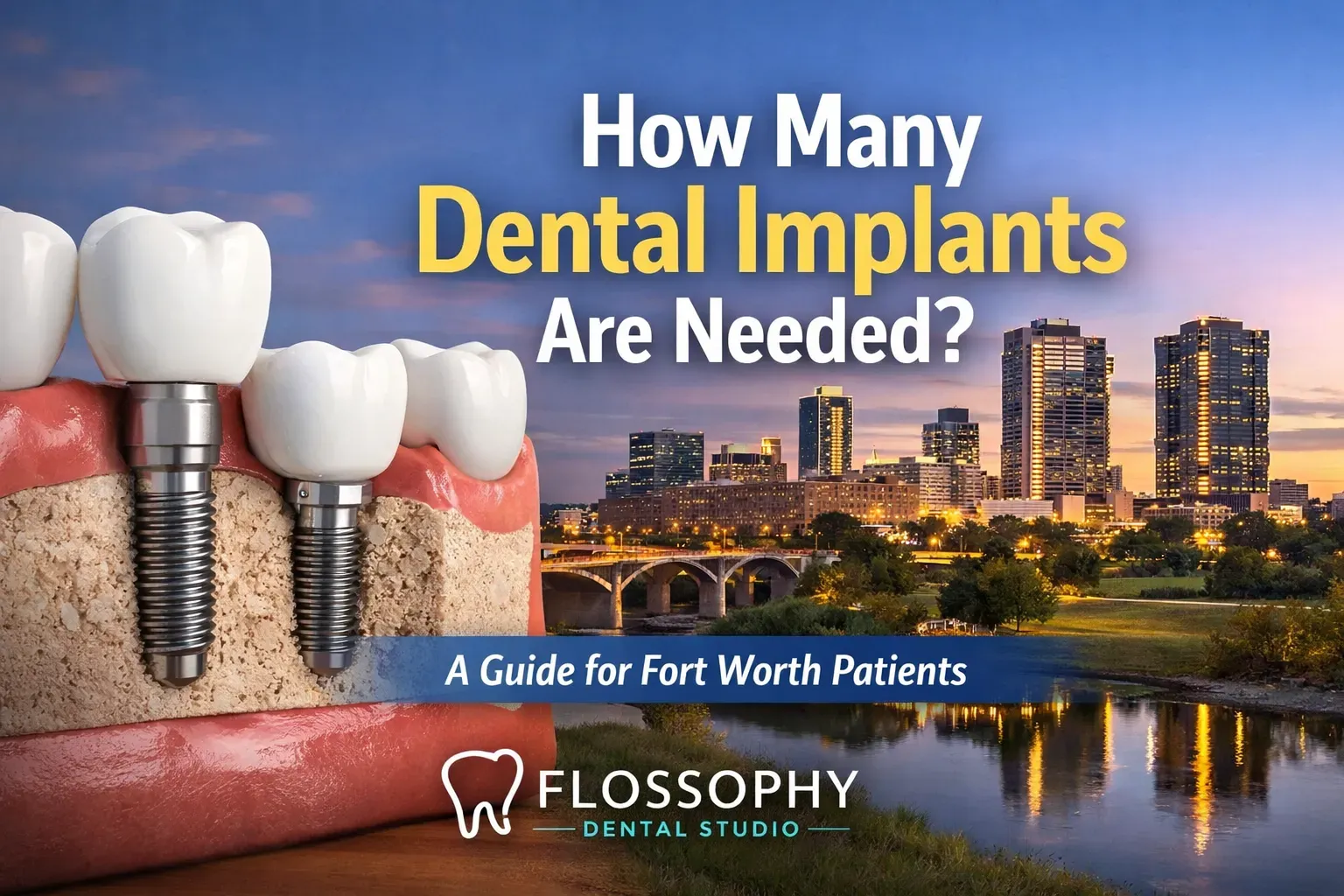
Losing a tooth changes more than your smile. It changes how you chew, how your jawbone holds its shape, and how confident you feel speaking or laughing in front of others. Over time, the bone beneath a missing tooth begins to resorb, nearby teeth can drift out of position, and your bite can shift in ways that create new discomfort you never had before. For patients across Fort Worth, dental implants have become the most predictable long-term solution because they replace both the visible tooth and the root structure holding it in place.

At Flossophy Dental Studio, we treat every implant case as its own puzzle. No two jaws heal the same way, and no two patients arrive with identical bone density, gum health, or cosmetic goals. That's why our approach starts with careful diagnostic imaging and an honest conversation about what you want your smile to do for you, whether that's replacing a single front tooth, rebuilding several teeth in a row, or anchoring a full denture that finally stays put.

We place and restore implants using the same clinical standards you'd expect from a specialist referral, but within the comfort of a practice that already knows your dental history. You get a coordinated plan from consultation through final crown, with a team that explains every step in plain language before we move forward.

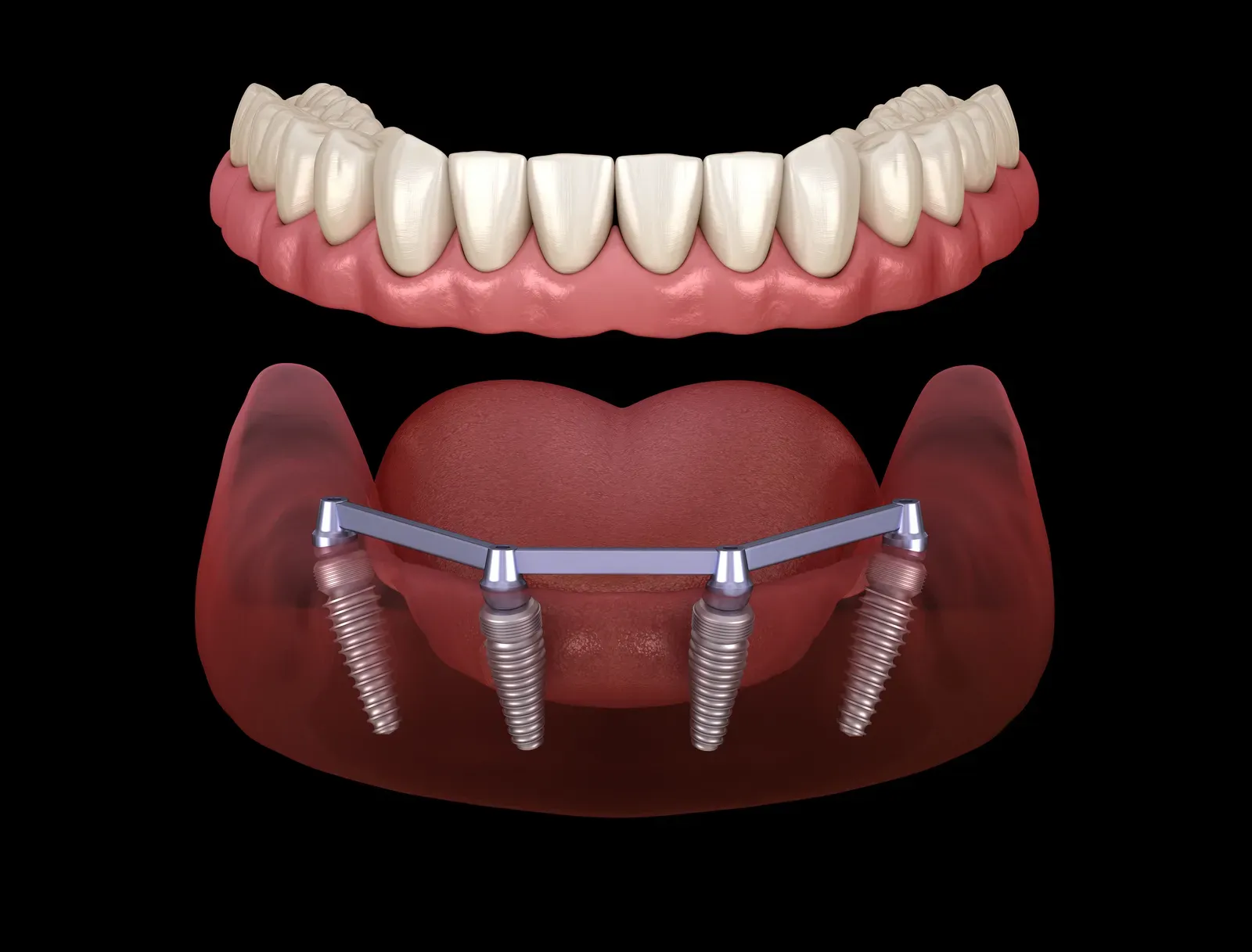
Photo related to dental implant

What Relief Can Look Like

A well-planned implant does far more than fill a gap in your smile. It restores function, protects surrounding teeth, and prevents the slow bone loss that follows tooth loss, so the benefits reach well beyond cosmetics.

Chewing Without Hesitation

An implant restores close to full biting force on that side of your mouth, so foods you've been avoiding, like apples, steak, or corn on the cob, are back on the table without a second thought.

Bone Preservation

Because the implant post replaces the missing tooth root, it continues to stimulate the jawbone the same way a natural root would, slowing the resorption that leads to a sunken facial appearance over time.

Protection for Neighboring Teeth

Unlike a bridge, an implant doesn't require grinding down the healthy teeth on either side. Your natural enamel stays intact, which protects those teeth from added stress and future complications.

A Stable, Natural Look

The crown is custom shaded and shaped to blend with your existing teeth, so the final result looks like a tooth that simply belongs there, not an obvious replacement.

Speaking With Confidence

Gaps and ill-fitting partials can affect your speech and make you self-conscious in conversation. An implant stays fixed in place, letting you speak, laugh, and smile without worrying about movement.

Long-Term Durability

With routine checkups and good home care, implants are designed to last for decades. They don't decay the way a natural tooth root can, which removes one major long-term risk entirely.

No Nightly Removal

Unlike a removable partial or denture, an implant-supported crown stays in place around the clock. You brush and floss it like a natural tooth, with no soaking, adhesives, or nightly removal routine.

A Foundation for Bigger Restorations

For patients missing several teeth, implants can anchor a bridge or an implant-supported denture, giving a level of stability that traditional removable options simply can't match.

Signs You May Be a Candidate for Dental Implants

Tooth loss affects everyone differently, and the right time to consider implants looks a little different for each patient. Here are some of the most common signs we hear about during consultations in our Fort Worth office.

A Missing Tooth You've Been Living With

Even one missing tooth can gradually shift your bite and cause nearby teeth to lean into the open space over months or years.

A Loose or Uncomfortable Partial Denture

If your removable partial slips while eating or talking, an implant-supported option can give you back a fixed, secure bite.

A Bridge That Needs Replacing

If an older bridge has failed or the supporting teeth are weakening, an implant can replace the gap without relying on neighboring teeth.

Noticeable Changes in Facial Shape

Bone loss from a missing tooth can create a sunken look along the jawline, which implants help prevent by preserving bone volume.

Difficulty Chewing on One Side

Favoring one side of your mouth to avoid a gap or sore spot can overwork healthy teeth and create jaw strain over time.

A Full Denture That No Longer Fits Well

Implant-supported dentures snap securely into place, eliminating the slipping and sore spots common with traditional removable dentures.

Self-Consciousness About Your Smile

Many patients avoid smiling fully or covering their mouth when they laugh because of a visible gap that an implant can resolve.

Adequate Bone Density, or a Willingness to Build It

Good candidates typically have enough bone to support an implant, or they're open to a bone graft that creates a solid foundation first.

Healthy Gums or Treatable Gum Disease

Active gum disease needs to be managed before implant placement, since healthy gum tissue is essential to long-term implant success.

General Good Health

Most healthy adults are candidates for implants, though we always review your medical history and any conditions that affect healing.

If any of this sounds familiar, a comprehensive evaluation is the right next step. Waiting too long after tooth loss can mean additional bone grafting is needed later, so earlier conversations typically lead to simpler, more predictable treatment.

Understanding Why Teeth Are Lost in the First Place

Tooth loss rarely comes from a single cause. Most patients we see in Fort Worth have a combination of contributing factors that built up over time.

Untreated Tooth Decay

Deep cavities left untreated can destroy enough tooth structure that extraction becomes the only option.

Gum Disease

Periodontal disease breaks down the bone and ligaments holding teeth in place, often with few early warning signs.

Trauma or Injury

A sports injury, fall, or car accident can fracture a tooth below the gumline beyond what a filling or crown can repair.

Failed Root Canals

Occasionally a previously treated tooth develops a new infection that can't be resolved with retreatment.

Chronic Teeth Grinding

Years of clenching or grinding can crack teeth or wear them down to the point of failure.

Genetics and Bone Density

Some patients are simply more prone to weaker enamel or lower bone density, making teeth more vulnerable over a lifetime.

Smoking and Tobacco Use

Tobacco restricts blood flow to the gums, accelerating bone and tissue breakdown around teeth.

Age-Related Wear

Decades of normal chewing force gradually wears enamel and weakens older restorations until a tooth can no longer be saved.

From First Consultation to a Confident New Tooth

Every implant case is planned around your individual anatomy and goals. Here's the general path most patients follow at Flossophy Dental Studio, though your exact timeline may vary depending on healing and any preparatory work needed.

1

Consultation and Treatment Planning

We begin by listening to your goals and reviewing your dental and medical history. This conversation shapes whether a single implant, multiple implants, or an implant-supported denture best fits your situation.

2

3D Imaging and Site Evaluation

Digital scans and 3D imaging let us measure bone density and map out nerves and sinus structures precisely, which allows the implant to be positioned for both stability and a natural appearance.

3

Implant Placement

The titanium post is placed into the jawbone under local anesthesia, with sedation options available for patients who want extra comfort. Most patients describe the procedure itself as far more manageable than they expected.

4

Healing and Osseointegration

Over the following months, the bone fuses securely around the implant post in a process called osseointegration. This waiting period is essential to building the strong foundation that makes implants so durable.

5

Custom Crown Placement

Once healing is complete, we attach an abutment and place a custom-shaded crown designed to match your surrounding teeth in size, shape, and color.

6

Ongoing Maintenance

Routine cleanings and checkups let us monitor the implant and surrounding gum tissue, catching any minor issues early and keeping your new tooth functioning well for years ahead.

Why Bone Health Determines Implant Success

An implant is only as strong as the bone surrounding it. When a tooth is lost, the jawbone that once supported its root no longer receives the chewing stimulation it needs, and the body begins to resorb that bone within months. This is why patients who wait years after losing a tooth sometimes need a bone graft before an implant can be placed safely.

During your evaluation, we use detailed imaging to measure the height and width of available bone at the implant site. If bone volume is limited, we may recommend a graft using your own bone, donor bone, or synthetic material to rebuild a stable foundation. This step adds time to the overall process, but it significantly improves the long-term success rate of the implant.

Once the implant is placed into healthy bone, the fusion process between the titanium post and surrounding tissue is what gives implants their remarkable strength, often rivaling the bite force of a natural tooth. Skipping proper bone evaluation is one of the most common reasons implants fail elsewhere, which is why we never shortcut this part of the process.

Caring for Your Implant Between Visits

Good daily habits make a real difference in how long your implant lasts and how healthy the surrounding gum tissue stays.

Brush and Floss Like a Natural Tooth

Implants don't get cavities, but the gum tissue around them can still develop infection if plaque is allowed to build up, so daily brushing and flossing remain essential.

Use a Water Flosser If Recommended

A water flosser can reach areas around an implant crown or bridge more comfortably than string floss, especially in the first weeks after restoration.

Avoid Chewing Extremely Hard Items

Ice, hard candy, and pen caps can chip a crown or stress the implant connection, so it's best to treat it with the same care as a natural tooth.

Address Teeth Grinding

If you grind your teeth at night, a custom nightguard protects both your implant crown and your remaining natural teeth from excess force.

Keep Up With Routine Cleanings

Professional cleanings allow us to check implant stability and gum health around the restoration, catching small issues before they become bigger problems.

Don't Skip Follow-Up Appointments

Especially in the first year, scheduled check-ins let us confirm healing is on track and the bite feels comfortable and balanced.

These habits support a healthy outcome, but they're not a substitute for professional evaluation. If you notice swelling, discomfort, or looseness around an implant, contact our office promptly rather than waiting for your next scheduled visit.

Ready to Stop Living With a Gap in Your Smile?

A missing tooth doesn't improve on its own, and the longer it waits, the more bone and structure can change around it. Let's talk through your options and build a plan that fits your mouth, your budget, and your timeline.

Flossophy Dental Studio · Fort Worth, Texas

Call us directly at (817) 555-0198

Frequently Asked Questions About Dental Implants

Take a look through some of the questions we hear most often from patients considering implants in Fort Worth.

How much do dental implants cost in Fort Worth?

Implant cost depends on the number of teeth being replaced, whether a bone graft is needed, and the type of crown or restoration chosen. We provide a detailed cost breakdown after your consultation and imaging, and our team will walk you through financing and insurance options so you know exactly what to expect before treatment begins.

Is dental implant surgery painful?

Most patients are surprised by how manageable the procedure is, since local anesthesia keeps the area numb during placement. Mild soreness and swelling are common for a few days afterward, similar to recovering from a tooth extraction, and over-the-counter pain relievers are usually enough to stay comfortable.

How long does the entire implant process take?

From placement to final crown, the full process typically takes three to six months, which allows time for the implant to fuse with the jawbone. If a bone graft is required first, healing time is added before the implant itself can be placed, so your timeline is always based on your individual bone health and healing pace.

Am I too old, or not old enough, for dental implants?

There's no upper age limit for implants as long as you're in reasonably good general health and have adequate bone to support the post. The main requirement is that your jaw has stopped growing, which is why implants are generally reserved for adults rather than teenagers still developing.

What happens if I don't have enough jawbone for an implant?

If imaging shows insufficient bone density, we can typically perform a bone graft to rebuild the area before placing the implant. This adds several months to your overall treatment timeline, but it greatly improves the implant's stability and long-term success once it's finally placed.

How long do dental implants actually last?

With consistent home care and regular dental checkups, the titanium implant post itself can last decades, and many patients keep theirs for life. The crown attached to the implant may eventually need replacement after 10 to 15 years due to normal wear, similar to a natural tooth's restoration.

Can implants replace a full arch of missing teeth?

Yes, several implants can be strategically placed to support a full arch bridge or implant-retained denture, giving you a fixed or securely snapped-in solution instead of a traditional removable denture. We'll evaluate your bone structure and bite to determine the ideal number and placement of implants for a full-arch case.

Will my insurance cover dental implants?

Coverage varies widely between plans, and many policies cover a portion of the crown or the extraction leading up to implant placement, even if the implant post itself isn't fully covered. Our front desk team will review your specific benefits and help you understand out-of-pocket costs before treatment starts.

We are open on Saturdays at our Haltom City office, 8:00am to 2:00pm

Open Saturdays